Billy Dunne
Daisy Jones & the SixBilly Dunne is the lead singer of The Six, a musician whose career grows out of childhood music-making with his brother and whose defining struggle is whether he will repeat the failures of the father who abandoned them. His path from a self-taught boy sharing an old guitar with Graham Dunne to a sober husband and father is marked by a recurring collision: music offers both a way to make emotional truths audible and a life capable of pulling him away from the people he loves.
Identity and Early Life
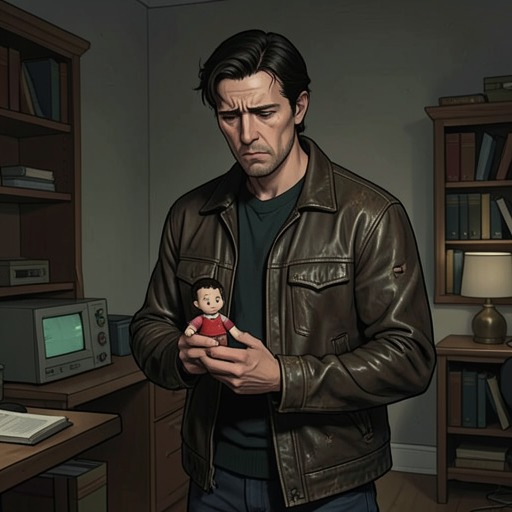
Billy and Graham grow up in Pittsburgh with their single mother, Marlene Dunne, after their father, William Dunne Sr., leaves in 1954. Billy remembers asking to go with his father when he moved to Georgia and being told no. The departure becomes more than a childhood disappointment: Billy later describes his father as a drunk who was absent from both sons’ lives, and he measures his own choices against the fear of becoming the same kind of father.
The guitar William Dunne Sr. leaves behind gives the brothers a different inheritance. Billy and Graham fight over who gets to play the old Silvertone guitar, and neither is taught by someone else; they teach themselves. That domestic beginning establishes music as both a shared bond and a means of self-creation. The Dunne Brothers, the blues-rock band they form in the mid-1960s, eventually become The Six, carrying that brotherly origin into a professional life far larger than the room in which they first learned to play.
Billy’s first encounter with Camila Dunne is recalled from two perspectives. After a wedding, he sees her working as a cocktail waitress at a hotel bar and notices her confidence as well as her appearance. Camila remembers seeing him in the lobby and being struck by his looks and self-assurance. Their mutual first impression begins a relationship that later becomes the central counterweight to his touring and musical ambitions.
The Band, Touring, and Fatherhood
As The Six settle into Los Angeles, they rent a house in Topanga Canyon and prepare to record their debut album at Sound City Studios. The house is initially a source of friction: Karen Karen finds it ramshackle and dislikes it, but Camila arrives, approves of the place, and changes Karen’s response. Camila also remembers the rosemary bushes surrounding the house. The small domestic details place her within the band’s early life, before marriage and family become the stakes against which Billy’s career is tested.
That test becomes immediate when Camila goes into labor while The Six are on tour. On November 28, Teddy Price appears backstage at a Hartford show and tells Billy he is going home. Billy recalls Teddy taking him by the arm and keeping hold of him until they are practically on the plane. Camila’s labor, not the band’s schedule, determines what happens next. Billy later admits that he missed the birth of his first daughter, Julia, after becoming deeply involved with alcohol and drugs, including heroin. His first experience of fatherhood is therefore bound to an absence he regards as a personal failure.
Billy enters rehab in the winter of 1974, and The Six cancel the few remaining dates on their tour. The other band members disperse for a time: Warren Rhodes buys a boat and docks it off Marina del Rey, Eddie Loving and Graham remain at the Topanga Canyon house with Karen, and Pete Loving goes to the East Coast to be with Jenny Manes. Camila rents a house in Eagle Rock and begins raising Julia. After sixty days in rehabilitation, Billy finally meets his daughter. The separation makes recovery concrete: it is not only an attempt to stop using substances, but also a chance to enter a family life from which his addiction has excluded him.
Later, a few weeks after another tour ends, Billy wakes at four in the morning to Camila telling him she is in labor. He takes Julia with him as he rushes Camila to the hospital. When a C-section becomes necessary, he stays beside her as closely as the medical staff allow, holding her hand and reassuring her. The couple’s twin daughters are born, and Billy says he can distinguish them immediately. Against the earlier story of a missed birth, this scene presents him as physically present through labor and delivery.
Music, Attraction, and Marriage
Billy’s creative work with Daisy Jones draws on a kinship that he finds difficult to separate from attraction. While writing Young Stars, he and Daisy have enough trust to keep tinkering when a song does not arrive easily. They return to the material over several days, building around the image of young stars whose old scars cannot be seen. Billy recalls that the album’s recurring language of aching, knots, breaking, and blows helped the song fit a larger concern: the pain of fighting one’s own instincts. The songwriting makes inward conflict part of the album’s structure rather than merely a subject discussed outside the studio.
That collaboration also exposes the intimacy between Billy and Daisy. Billy says that the qualities that made Daisy feel alive in the world also stirred him, and that they seemed to share thoughts and struggles without needing to explain them. He describes being mesmerized by her and acknowledges falling in love with her, while also insisting that he loved Camila and had been faithful to her since getting sober. The tension is not resolved by denying either attachment: the narrative presents the emotional force between the collaborators alongside Billy’s commitment to his wife.
Billy understands his marriage to Camila as a mutual promise to put their marriage and family first and to trust one another’s judgment about how to do that. His account of love includes forgiveness, patience, and faith, but also the possibility of being hurt by someone one loves. For him, trust is consequential precisely because it allows a partner to have some privacy and make difficult choices; it is not the same as demanding that every private experience be surrendered. His own history of betraying Camila’s trust through addiction gives those principles a cost. They are not abstractions detached from the marriage, but values he believes he has to live up to.
Loss, Choice, and Later Life
The death of Teddy Price destabilizes Billy’s recovery. Billy describes feeling as if his heart had turned to stone and his soul had been put on ice; he says he could not face reality sober and withdrew from his life. Daisy also recalls deciding that Teddy’s death meant there was no point in getting sober, illustrating how grief becomes a justification for renewed self-destruction. Billy’s response echoes his earlier addiction, but the account makes clear that bereavement, not simply the pressures of fame, is part of the crisis.
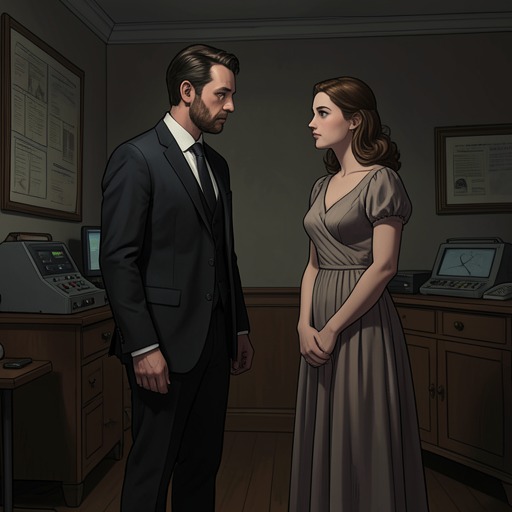
During the final stretch of the band’s story, Camila and Daisy have a private conversation at a hotel. After Camila leaves with Julia, Daisy understands that she hopes not to see her again, and notices Camila’s shaking fingers as she unlocks her room. Billy returns to his own room, finds Camila and the girls asleep, and breaks down crying on the floor. He recognizes that continuing with rock and roll could cost him his life with them, and decides not to choose the career. Daisy leaves on the next flight. The moment turns an emotional conflict into a decision with an immediate consequence: the band’s future and Billy’s family life can no longer be treated as compatible priorities.
Billy later says he left the band, signed a publishing deal with Runner Records, and began writing songs for pop singers in 1981. He describes the life that followed as quiet and stable, though it included a noisy household with three daughters and Camila. He resists presenting his departure as pure nobility, calling it a man reaching his limit; leaving was what he understood he had to do to meet the standard Camila had set. His retrospective praise of her is intense, but not idealized: he recalls her stubbornness and imperfections as well as her loyalty, and credits her insistence on him with helping make him the man he became.
When Camila is diagnosed with lupus, Billy treats the illness as an opportunity to give back. He intends to take over when her body is tired or aching, stay home to raise their daughters, and remain beside her as a partner. His later life thus reverses the absence that shaped his childhood and the absence he regrets at Julia’s birth. Billy’s story does not make family a simple cure for addiction or conflict; it shows him repeatedly having to choose presence, recovery, and responsibility over the demands of a career and the escape of substances.